Why Yomitan Feels More Welcoming to Americans Than Half the Cities Back Home
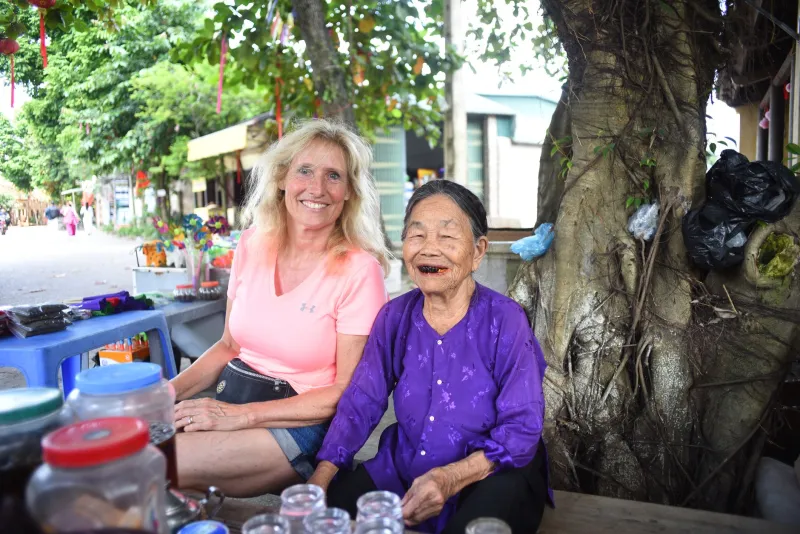
Something counterintuitive tends to happen to Americans on their first real trip to Yomitan. They arrive braced for the experience of foreignness — the language gap, the unfamiliar customs, the navigation anxiety that comes with being in a place where you can't read the signs. And then, somewhere around day two or three, that bracing relaxes. Not because Yomitan is Westernized or because it's made itself easier for tourists. It hasn't, particularly. It's because the village turns out to be, in some deep structural way, genuinely welcoming — and that quality cuts through the surface unfamiliarity in ways that catch people off guard.
"I felt more comfortable walking through Yomitan than I do in most American cities I've visited," said Tara Brennan, a teacher from Portland who spent two weeks in the village last spring. "And I couldn't fully explain why. Nobody was speaking my language. I couldn't order food without pointing. But I didn't feel watched or judged or like I was in the wrong place."
That experience is common enough to be worth examining. What is it about Yomitan — a deeply Japanese, historically distinct, culturally specific village — that makes it feel less alienating to Americans than, say, navigating a new neighborhood in a city back home?
The History That Shapes the Welcome
Yomitan's relationship with outsiders is complicated and layered in ways that most visitors don't immediately know about. The village sits in a part of Okinawa that has a long, sometimes painful history of outside contact — including decades of American military presence that left complex marks on the community. What emerged from that history isn't hostility or performative hospitality, but something more nuanced: a genuine, practiced capacity for coexistence.
Yomitan has had to figure out how to hold its own identity while sharing space with people who arrived from somewhere else. That work shows. The community doesn't perform welcome for visitors — it has simply developed, over generations, an actual capacity for it. There's a difference, and people feel it.
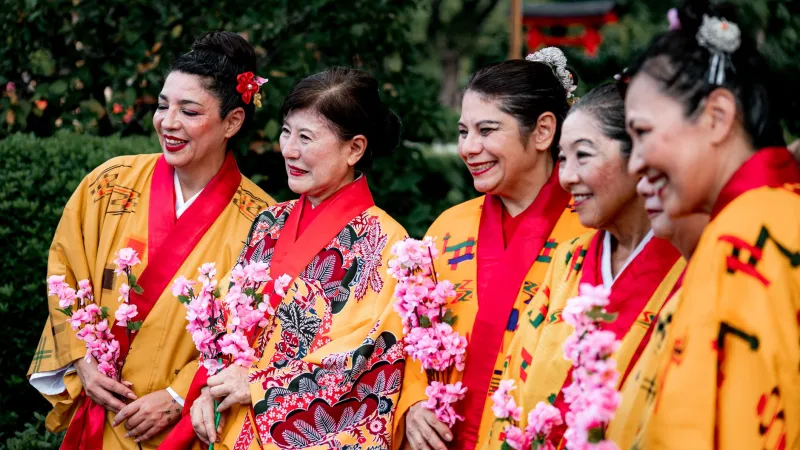
The village also has a strong tradition of cultural pride that doesn't express itself as exclusion. The pottery masters at Yachimun no Sato work in open studios. The eisa performers practice in community spaces. The local knowledge isn't hoarded — it's demonstrated, often right in front of you. That openness is an invitation, even when no words are exchanged.
Small Scale, Human Scale
American cities, particularly the large ones, have a scale problem when it comes to belonging. When you're surrounded by millions of strangers, the default social setting is anonymity. Nobody makes eye contact on the subway. Nobody waves. The sheer number of people makes meaningful contact impractical, so everyone defaults to a kind of mutual non-acknowledgment that reads, to newcomers, as coldness or indifference.
Yomitan has about 40,000 residents. That's not tiny, but it's human-scale in a way that most Americans haven't lived in since childhood, if ever. People notice you — not in a surveillance way, but in the way that communities notice new faces and tend to respond with curiosity rather than avoidance. Shopkeepers remember return visitors. Locals at the beach nod. The produce vendor at the market gestures you toward the good persimmons without being asked.
These are small things. But accumulated across a day, they create a fundamentally different felt experience of being in a place. You don't feel invisible in Yomitan. And for Americans accustomed to urban anonymity, that registers as warmth.
The Paradox of Legible Difference
Here's something that sounds strange until you sit with it: Yomitan is easier to navigate psychologically than many American cities precisely because its cultural difference is legible and consistent. You know you're a guest. You know the norms aren't yours. That clarity is oddly freeing.
In American cities, particularly ones undergoing rapid demographic or economic change, the social rules are often murky, contested, and charged. Which neighborhood is welcoming to whom? Which spaces are coded for which groups? The anxiety of navigating those unspoken American hierarchies is real and exhausting.
In Yomitan, you're clearly a visitor from somewhere else, and that status comes with its own simple, stable social role. The expectations are low and gracious: be curious, be respectful, be willing to try. Most Americans can manage that. And the relief of having a clear, uncomplicated social position — even a foreign one — turns out to feel better than the murky, status-anxious positioning of life in a major American city.
Intentional Without Being Artificial
Yomitan has invested, thoughtfully and over time, in the infrastructure of cultural sharing — not tourism infrastructure in the resort sense, but genuine pathways into local life. Craft workshops where visitors work alongside local artists. Community festivals that are genuinely for residents, not staged for cameras. Restaurants where the menu exists in one language and the cook will happily walk you through it with hand gestures and a smile.
This is different from the kind of manufactured "authentic experience" that high-end travel packages sell. It's not curated for Instagram or designed to make Americans feel comfortable by making Japan feel less Japanese. It's genuinely Japanese, and it's genuinely open. That combination is rarer than it sounds.
Compare it to what visitors often encounter in international tourist hotspots — a version of local culture that's been sanded down, adjusted, and repackaged for outside consumption — and Yomitan's approach feels almost radical in its straightforwardness.
What It Actually Means to Feel at Home
Feeling at home somewhere isn't really about familiarity. It's about being seen without being judged, having a clear enough sense of how to move through a space, and experiencing enough small moments of genuine human contact to feel that your presence is, at minimum, acceptable and, at best, welcome.
Yomitan delivers all three of those things with a consistency that surprises Americans who arrive expecting the alienation of deep foreignness. The village doesn't try to be accessible. It just is — rooted in its own identity, open in its own way, and quietly effective at making people feel like they belong, even when they very clearly don't yet.
That might be the most distinctly Okinawan thing about it. The concept of ichariba chōdē — a local phrase roughly translating to "once we meet, we are family" — isn't a tourism slogan in Yomitan. It's a lived orientation. And Americans, many of whom have been searching for exactly that feeling in their own cities without finding it, tend to recognize it the moment they do.