Once Is Never Enough: The Strange Pull That Keeps Drawing Americans Back to Yomitan

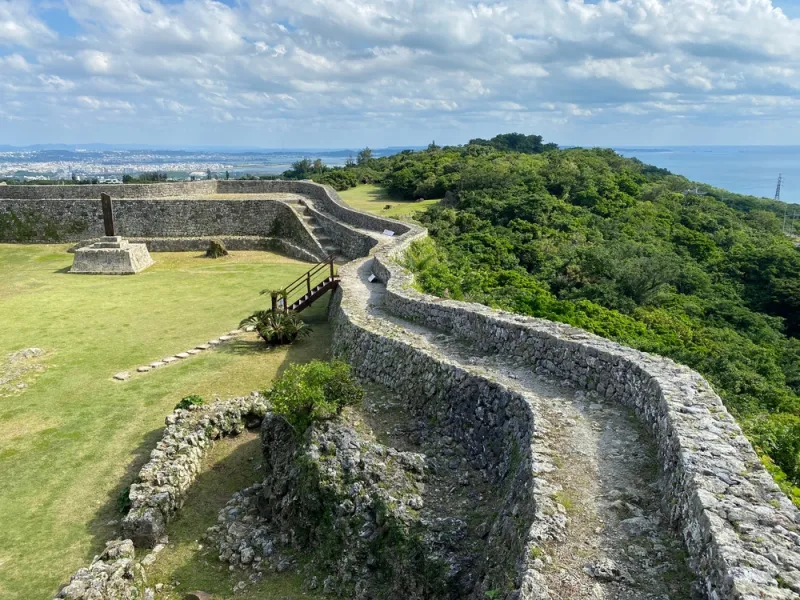
Kayla from Austin will tell you she had zero plans to return to Okinawa after her first trip. She'd done the highlights—Shuri Castle, Kokusai Street, a snorkeling day tour—and figured she'd checked the box. But somewhere between a slow afternoon at Zakimi Castle ruins and an unplanned conversation with a potter in Yachimun no Sato, something shifted. Eight months later, she was on a return flight. Not to Naha. Straight to Yomitan.
"I kept telling people I just wanted to go back to one specific place," she laughs. "I couldn't even fully explain why."
She's not alone. Talk to enough Americans who've visited Yomitan—even briefly—and you start hearing the same thing. Not just I loved it, but something closer to it followed me home. There's a specific texture to the place that lodges itself somewhere you can't quite locate, and the only way to address it is to go back.
So what's actually happening here?
It's Not the Beaches (Though the Beaches Help)
Okinawa has no shortage of stunning coastline. Miyako Island has turquoise water that looks photoshopped. Ishigaki has world-class diving. By purely visual metrics, Yomitan isn't necessarily the winner.
What Yomitan has is context. The sea there doesn't feel like a backdrop—it feels like a participant. Cape Zanpa's lighthouse sits above cliffs that make you feel genuinely small in a way that's more meditative than scary. The beaches aren't manicured for resort guests; they're just there, doing their thing, whether you show up or not.
Repeat visitor Marcus, a software engineer from Portland who's made the trip three times in five years, puts it plainly: "Most beach destinations perform for you. Yomitan doesn't care if you're there. And somehow that makes you want to stay longer."
That indifference—or more accurately, that authenticity—is part of the draw. The village isn't optimized for tourism. It's optimized for the people who actually live there.
The Sensory Memory That Doesn't Fade
Travel researchers talk about something called place attachment—the emotional bond people develop with specific locations. It tends to be stronger when a place engages multiple senses in a coherent, distinctive way. Yomitan, it turns out, is a sensory layering machine.
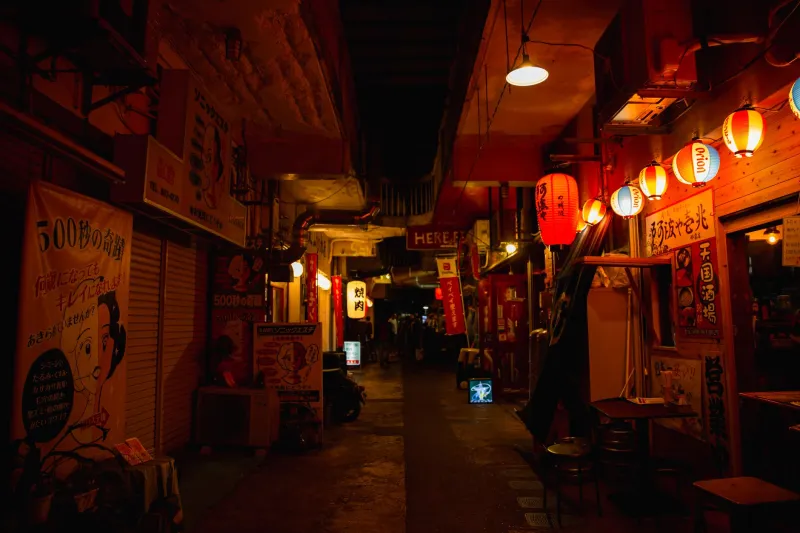
There's the smell of salt air mixed with something floral that hits you the moment you step outside in the morning. The weight of the humidity that, after a day or two, stops feeling oppressive and starts feeling like a weighted blanket. The specific sound profile of the village at dusk—cicadas, distant ocean, maybe a shamisen if you're near the right neighborhood.
And then there's the food. Not restaurant food, necessarily, but the market food. The purple sweet potato everything. The bitter melon that you hate on day one and crave by day three. The way a bowl of Okinawa soba from a roadside spot somehow tastes like a decision you made correctly.
"I've tried to recreate the goya champuru at home four times," admits Diana, a teacher from Ohio who visited Yomitan on a cultural exchange trip and has returned twice since. "It never tastes the same. I think I have to go back just to recalibrate."
That's the sensory hook: Yomitan creates cravings that can't be satisfied anywhere else.
Small Enough to Feel, Large Enough to Discover
One of the non-obvious reasons Yomitan sticks is its scale. It's not a city that overwhelms you, and it's not a tiny resort island where you've seen everything by Tuesday afternoon. It exists in a sweet spot where you can feel genuinely oriented—like you understand the shape of the place—while still stumbling onto something new every day.
First-timers often describe a specific moment, usually around day three or four, where the village stops feeling foreign and starts feeling familiar. The guy at the corner store nods when you walk in. You know which road takes you to the cape without checking your phone. You have a favorite bench.
That shift from tourist to something-slightly-more is rare. Most destinations never let you get there. Yomitan hands it to you almost by accident, and then you go home and miss it like you'd miss a place you'd lived.
Repeat visitors describe coming back partly to reclaim that feeling—to walk into the familiarity they built on the last trip and find out if it's still there. It always is. The village holds the memory of you even when you've forgotten parts of it.
The People Equation
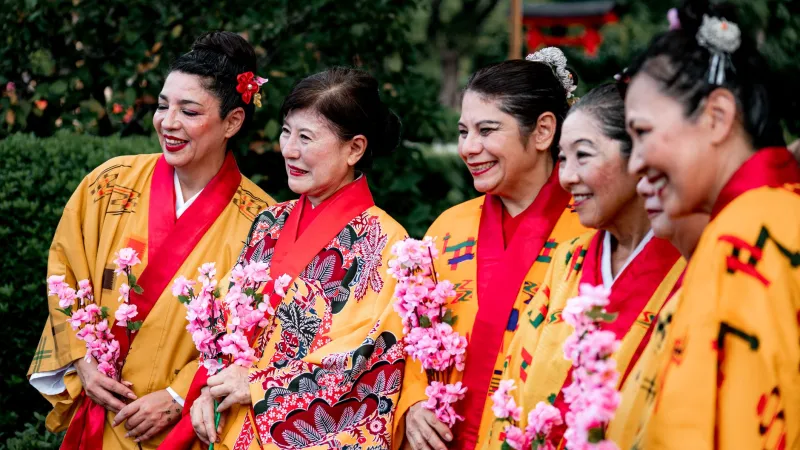
Yomitan's residents have a reputation among visitors for being warm without being performatively so. There's no tourism-industry friendliness happening here—no scripted welcomes, no practiced enthusiasm. What you get instead is the quiet, genuine curiosity of people who live in a place they actually like.
For Americans used to transactional travel interactions, this registers as something almost disorienting at first. Then it becomes the thing they talk about most when they get home.
"I had a twenty-minute conversation with a woman at the pottery village about absolutely nothing important," says Marcus. "She didn't speak much English, I don't speak Japanese. But we figured it out. I think about that conversation more than I think about most conversations I have in English."
That kind of connection—unplanned, low-stakes, human—is increasingly hard to find in heavily touristed destinations. Yomitan still offers it, partly because the village hasn't been overrun, and partly because its culture has always valued a certain quality of presence.
The Feeling You Can't Name at Baggage Claim
Ask returning visitors what they're chasing when they book another trip to Yomitan, and most of them pause before answering. It's not a specific attraction or event. It's not even the people, exactly, or the food, or the water.
It's something closer to a state. A particular way of moving through days that Yomitan seems to make available—slower, more attentive, less managed. Americans especially, who tend to arrive wound tight from schedules and notifications and the general velocity of modern life, often describe Yomitan as the first place where they genuinely decompressed rather than just vacationed.
And once you've felt that, the ordinary pace of your regular life starts to have a gap in it. A Yomitan-shaped gap.
Kayla is already planning her third trip. This time, she's staying three weeks instead of ten days. "I figured out that I spend the first week just landing," she says. "The second week is when it actually starts."
For a village that isn't trying to be anyone's favorite place, Yomitan has a remarkable track record of becoming exactly that.