After Dark in Yomitan: The Village's Quieter, Realer Night Scene
There's a version of Okinawa nightlife that exists in listicles — neon-soaked streets in Naha, karaoke chains, cocktail bars with English menus. Yomitan isn't that. And if you roll into the village expecting that, you're going to feel like you missed the party.
But spend a few evenings actually paying attention — sitting with a cold Orion at a counter where you're the only non-local, or stumbling onto a beach where paper lanterns are being lit for reasons you don't fully understand yet — and you'll realize the party is happening. It just doesn't announce itself.
The Izakaya as Living Room
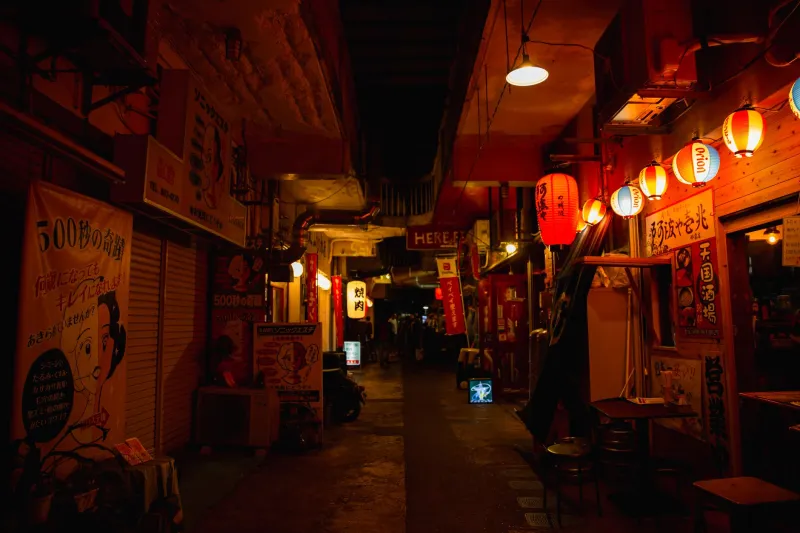
The izakaya is Japan's answer to the neighborhood bar, but calling it a bar undersells it. It's closer to a combination of a diner, a pub, and your friend's kitchen — a place where you order small plates and drinks and stay for hours. In Yomitan, the izakayas worth knowing about aren't on the main road. They're tucked into residential streets, marked by hand-painted signs and the sound of conversation spilling out through sliding doors.
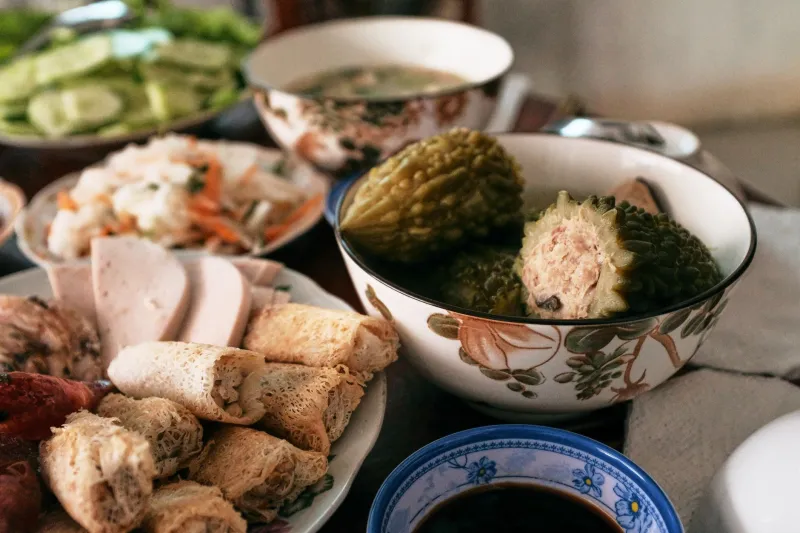
Locals here eat late by American standards — dinner often starts at 7 or 8 PM, and a good izakaya session can stretch well past midnight. The food leans heavily Okinawan: rafute (braised pork belly), goya champuru (bitter melon stir-fry), mimiga (thinly sliced pig ear with vinegar), and whatever the owner felt like making that day. Pair it with awamori — Okinawa's indigenous rice spirit, which hits different from sake — and you've got an evening.
The key to getting into these places as a visitor is simple: go early enough to get a seat, order confidently (pointing works), and don't rush. The staff will warm up. If you're lucky, someone will ask where you're from, and that's usually the beginning of something memorable.
Live Music That Doesn't Feel Performative
Okinawan music has a soul that's distinct from mainland Japanese pop — it's got roots in the Ryukyu Kingdom era, influenced by Southeast Asia and China in ways that give it a sound unlike anything else in Japan. The sanshin, a three-stringed instrument related to the Chinese sanxian, is the backbone of it. And in Yomitan, you can hear it played not as a tourist attraction but as a genuine part of social life.
A handful of small venues — more like rooms with a stage than anything you'd call a concert hall — host live sessions on weekends and some weeknights. These aren't open-mic nights. The musicians are often older men and women who've been playing for decades, performing traditional Okinawan folk songs (minyo) for an audience that knows the words and isn't shy about joining in.
There's no dress code, no cover charge at most of these spots (though you're expected to order drinks), and no velvet rope. Show up, sit down, listen. If you can clap on beat, you're contributing.
Seasonal Night Festivals: The Ones Worth Staying Up For
Yomitan's festival calendar has daylight events that get attention — but the after-dark portions are where things get genuinely interesting. The Yomitan Tug-of-War Festival, one of the largest in Okinawa, extends into the evening with food stalls and community gatherings that feel nothing like a staged cultural show. It's chaotic and loud and completely sincere.
Summer brings Eisa — Okinawa's traditional drum dance, performed by young community members during the Obon season to honor ancestral spirits. In Yomitan, Eisa isn't a ticketed event. Groups move through neighborhoods at night, drumming and dancing in the street, and residents come out to watch from their driveways and doorways. If you're staying somewhere in the village during Obon (typically mid-August by the lunar calendar), you may hear the drums before you see the dancers. Follow the sound.
The beach also plays a role in Yomitan's evening culture in ways that are easy to miss if you're not paying attention. On certain summer evenings, families gather at the shore — not for organized events, but for the kind of informal community ritual that doesn't have a name or a hashtag. Fires, sparklers, kids running in the dark, grandparents in folding chairs. It's the kind of thing that makes you feel like you've accidentally been let into something private.
The Convenience Store as Social Hub (Seriously)
This sounds like a joke but it isn't. In rural Japan, the convenience store — combini — functions as a genuine community gathering point after hours, especially in areas without a dense bar scene. Yomitan's Family Mart and Lawson locations see a real mix of people late at night: high schoolers on bikes, older men with canned chu-hai drinks, shift workers grabbing food.
Sitting outside a combini at 11 PM with a hot can of coffee watching Yomitan's quiet streets is its own kind of evening activity. It's not glamorous. It's oddly peaceful.
A Note on Expectations
If you're coming to Yomitan expecting a nightlife scene in the conventional sense — multiple bars within walking distance, late-night clubs, a strip of entertainment options — you'll be disappointed. That's not what this village is. What it is, instead, is a place where evenings are social in a slower, more organic way. Where the night feels like an extension of community rather than an escape from it.
That's actually rarer than it sounds. Most places that attract visitors end up performing their nightlife for outsiders. Yomitan hasn't gotten there yet — or maybe it just never will. Either way, the evenings here are genuinely its own, and that's worth more than a neon sign.
Come with patience, come curious, and come hungry. The village will meet you the rest of the way.