Beyond the Guidebook: Yomitan's Ancient Ruins and Living Shrines Worth Seeking Out
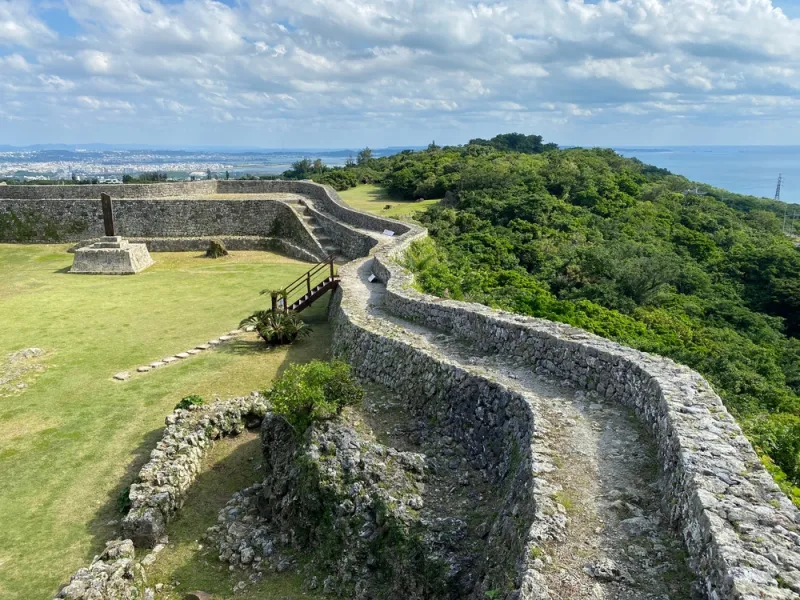
Photo: ancient Ryukyuan castle ruins stone walls Okinawa, via www.datocms-assets.com
Most travelers passing through Okinawa have Shuri Castle on their itinerary. And sure, it's impressive. But if you really want to understand the spiritual and historical fabric of this island, you need to slow down, veer off the main road, and spend some time in Yomitan. This village sits on the central west coast of Okinawa's main island, and beneath its quiet, unhurried surface lies a remarkably deep cultural story — one written in stone walls, sacred groves, and rituals that have survived centuries of upheaval.
Yomitan isn't just a pretty coastal village. It was a significant site during the Ryukyu Kingdom era, and that history hasn't been buried or sanitized for tourists. It's still right there, if you know where to look.
What Are Gusuku, and Why Do They Matter?
Before you start exploring, it helps to understand what you're actually looking at. Gusuku (グスク) are ancient Ryukyuan fortifications — castle ruins, essentially, though the term carries broader cultural and spiritual weight than the English word "castle" implies. Many gusuku weren't purely military structures. They were also sacred spaces, tied to ancestor veneration and local religious practices that predate formal Buddhism or Shinto influence.
In Yomitan, the gusuku ruins you'll encounter feel genuinely untouched by the kind of commercial tourism that can hollow out a historical site. There are no gift shop lines here. There are mossy limestone walls, ocean views that stretch to the horizon, and a stillness that's hard to describe without sounding like a travel brochure cliché — but trust us, it earns that description.
Zakimi Castle Ruins: The Crown Jewel of Yomitan's Ancient Past
If there's one site that anchors any spiritual or historical tour of Yomitan, it's Zakimi Castle (座喜味城跡). A UNESCO World Heritage Site, Zakimi was built in the early 15th century by the legendary Ryukyuan military commander Gosamaru. The construction is extraordinary — the arched stone gates are considered some of the finest examples of Ryukyuan masonry anywhere on the island.
What makes Zakimi special beyond its architecture is the atmosphere. Visit on a weekday morning before tour buses arrive and you'll often have the site nearly to yourself. The walls rise dramatically against the sky, and from the upper ramparts you can see clear across to the East China Sea. It's the kind of place that makes you stop talking mid-sentence.
Practical note: Admission is free. There's a small parking area nearby, and the site is well-marked from Route 12. Wear comfortable shoes — the stone paths can be uneven.
Mura Utaki: The Neighborhood Shrines That Locals Actually Use
Less documented but arguably more fascinating are Yomitan's scattered utaki — sacred groves or shrine sites that form the backbone of indigenous Okinawan spiritual practice. Utaki are central to the noro tradition, a system of female priestesses who historically served as spiritual intermediaries between communities and their ancestral deities.
Unlike the grand gusuku, utaki often look modest to the uninitiated — a cluster of old trees, a low stone enclosure, a few offerings of incense or awamori (local rice spirit). But don't let the understated appearance fool you. These are active sites. Locals visit them, especially around the lunar new year and during community festivals. If you happen upon one during a quiet moment, the appropriate response is respectful observation from a distance. Don't step over offerings or enter enclosed areas unless it's clearly open to visitors.
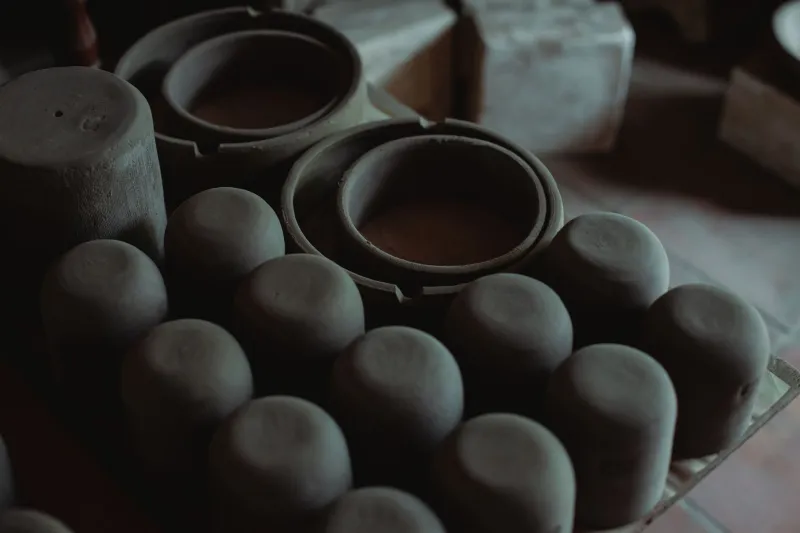
Yomitan has several utaki scattered across its neighborhoods, some easier to find than others. Asking at a local pottery studio or café is often the best way to get informal directions — residents are generally warm toward visitors who approach with genuine curiosity rather than a checklist mentality.
Chibichiri-gama and Shimuku-gama: Caves That Carry Weight
No spiritual or historical tour of Yomitan is complete without acknowledging its more somber sacred sites. The village is home to two caves — Chibichiri-gama and Shimuku-gama — that tell sharply contrasting stories from the Battle of Okinawa in 1945. At Shimuku-gama, over a thousand civilians sheltered and survived. At Chibichiri-gama, a tragic mass death occurred, influenced by wartime propaganda and fear of American soldiers.
These aren't lighthearted tourist stops. They're places of mourning and memory that locals hold with enormous reverence. Visiting requires a respectful, measured approach. A local guide is strongly recommended — context matters enormously here, and entering without it risks misunderstanding the weight of what you're seeing. The Yomitan Village Board of Education has resources, and several local guides offer structured visits.
How to Approach These Spaces as a Visitor
Spiritual tourism done well is about presence and humility, not just Instagram coordinates. A few things worth keeping in mind:
- Go quietly. Loud conversations and phone calls feel jarring at sites where locals come to pray or reflect.
- Ask before photographing. At active utaki especially, it's worth pausing before pointing a camera. Use judgment.
- Come prepared for the elements. Many of these sites involve outdoor walking, sometimes through vegetation. Sunscreen, bug spray, and closed-toe shoes go a long way.
- Visit in the morning. Sites like Zakimi are significantly more atmospheric before midday heat and afternoon tour groups arrive.
- Learn a little before you go. Even a basic understanding of Ryukyuan history makes these places come alive in a different way. The Yomitan Village Museum is a great starting point and is inexpensive to enter.
The Bigger Picture
What Yomitan offers that larger Okinawan tourist destinations don't is a kind of unmediated access to living history. The village hasn't been packaged for mass consumption. The ruins are genuinely ruined. The shrines are genuinely in use. The caves hold real grief that hasn't been turned into spectacle.
For American visitors especially, there's something meaningful about sitting with that complexity — Okinawa's history intersects with US military presence in ways that are still very much present in daily life here. Approaching Yomitan's sacred spaces with awareness of that context transforms a sightseeing trip into something closer to genuine cultural exchange.
That's the kind of travel Yomitan does best.