Mud, Fire, and Masterpieces: Yomitan's Pottery Village Is the Art Trip You Haven't Taken Yet
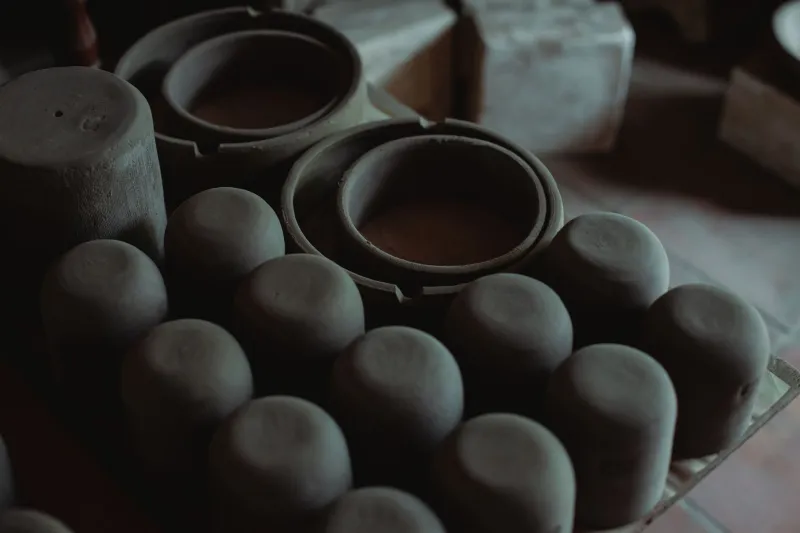
Imagine pulling up to a cluster of low-slung studios and open-air kilns, the smell of wood smoke drifting across a courtyard where a potter is unhurriedly shaping a vase that will take three days to fire. There's no line. No timed entry ticket. No tour group blocking your view. A woman at the front of the nearest studio waves you in and offers tea before you've even introduced yourself.
This is Yachimun no Sato — Yomitan's Potter's Village — and if you care about craft, clay, or just experiencing Japan in a way that feels genuinely unscripted, it deserves a spot at the top of your itinerary.
The Clay Beneath the Surface
Yomitan-yaki, the regional pottery style born from this corner of Okinawa, has a lineage stretching back centuries. Okinawan ceramics developed distinctly from mainland Japanese traditions, absorbing influences from Southeast Asia, China, and Korea through the Ryukyu Kingdom's extensive trade networks. The result is a visual language that feels simultaneously familiar and foreign — earthy glazes in deep cobalt, coral red, and forest green, often layered over bold painted motifs of fish, waves, and tropical flora.
The craft nearly disappeared. The devastation of World War II leveled much of Yomitan and scattered its artisans. But in the 1970s, a deliberate revival effort — led in part by legendary potter Jiro Kinjo — brought kilns back to life and established the communal studio complex that still anchors the village's ceramic identity today. That revival spirit, the sense that this craft was worth fighting to preserve, infuses the work you'll find here with something you can't manufacture.
What Yachimun no Sato Actually Looks Like
The Potter's Village is a collection of independently operated studios arranged around shared kiln spaces and a central path that winds through subtropical gardens. It's not a museum — it's a working community. On any given weekday, you can watch potters at their wheels, observe glaze mixing, and wander into shops attached directly to production studios where pieces are still warm from firing.
The scale is human. You won't feel like you're being processed through a tourist experience. Prices range from genuinely accessible (small cups and sake vessels in the $20–$60 range) to serious collector territory (large decorative pieces from established artists can run several hundred dollars). Either way, you're taking home something made by hand, a few yards from where you're standing.
A few studios specialize in particular forms — one family operation focuses almost exclusively on traditional Ryukyuan storage jars, while a younger artist nearby is producing sculptural wall pieces that wouldn't look out of place in a Brooklyn gallery. That range is part of what makes the village worth an extended visit rather than a quick loop.
Getting Your Hands Dirty
For visitors who want more than browsing, hands-on workshops are available at several studios throughout the village. Most sessions run two to three hours and cover basic wheel throwing or hand-building techniques, with bilingual instruction increasingly common as international interest has grown.
You won't leave as a master potter. But you will leave with a deeper respect for the physical intelligence involved in the craft — and probably a lopsided bowl you'll be oddly proud of. Finished pieces are typically fired and shipped to your home address, which means you don't have to stress about packing fragile ceramics in your carry-on.
Booking ahead is recommended, especially between March and May and again in fall when the village hosts its annual Yachimun Festival. During festival weekends, potters from across Okinawa set up stalls, prices dip on select pieces, and the whole area takes on a festive energy that's worth timing your trip around.
The New Generation Is Changing the Game
Here's what sets Yomitan apart from more established Japanese craft destinations: the next generation of potters isn't just maintaining tradition — they're actively in conversation with it.
Several younger artists working in and around the village have studied abroad, collaborated with ceramic communities in the United States and Europe, and returned with expanded vocabularies while keeping their work rooted in Okinawan materials and sensibilities. The clay here is local. The wood ash glazes reference centuries-old recipes. But the forms and surfaces sometimes push into territory that surprises even longtime collectors.
One potter in her early thirties, who trained in both Okinawa and at a studio in Vermont, describes her practice as "arguing with my teachers — respectfully." Her work sells through a small gallery space attached to her studio and has attracted attention from American buyers who discovered her through social media before they'd ever heard of Yomitan.
This creative tension — between preservation and evolution — is exactly what keeps a craft tradition alive. And it's exactly what makes Yomitan's pottery scene feel current rather than curated.
Why This Beats the Kyoto Craft Circuit
Kyoto is extraordinary. Nobody's saying otherwise. But if you've tried to visit a traditional pottery studio in Kyoto during peak season, you know what it can feel like: timed slots, crowds, gift shop pressure, and the nagging sense that you're watching a performance of craft rather than the real thing.
Yomitan offers a different proposition. The village is genuinely off the beaten path for most American travelers, which means you're more likely to have an actual conversation with an actual artist than to shuffle past velvet ropes. The pace is Okinawan — which is to say, unhurried in the best possible way. And because the ceramics tradition here is less internationally famous than Kyoto's, the experience hasn't yet been packaged into something frictionless and forgettable.
That will probably change as word spreads. All the more reason to go now.
Planning Your Visit
Yomitan's Potter's Village is about a 40-minute drive north of Naha, making it an easy day trip or a natural anchor for a longer stay in the village. If you're renting a car — which we strongly recommend for exploring Yomitan properly — you can combine a morning at the studios with an afternoon at Zanpa Cape or the nearby Murasaki Mura cultural park.
For serious collectors or anyone considering a multi-day ceramics focus, a few local guesthouses cater specifically to art-oriented travelers and can help arrange private studio visits outside of regular hours. The village's informal network of English-speaking residents is also a useful resource for connecting with artists who don't have heavy tourist infrastructure but are genuinely happy to welcome curious visitors.
Bring an extra bag. You're going to buy something.