Vacation Brain vs. Real Life: Why Your First Trip to Yomitan Is the Worst Time to Decide You're Moving There
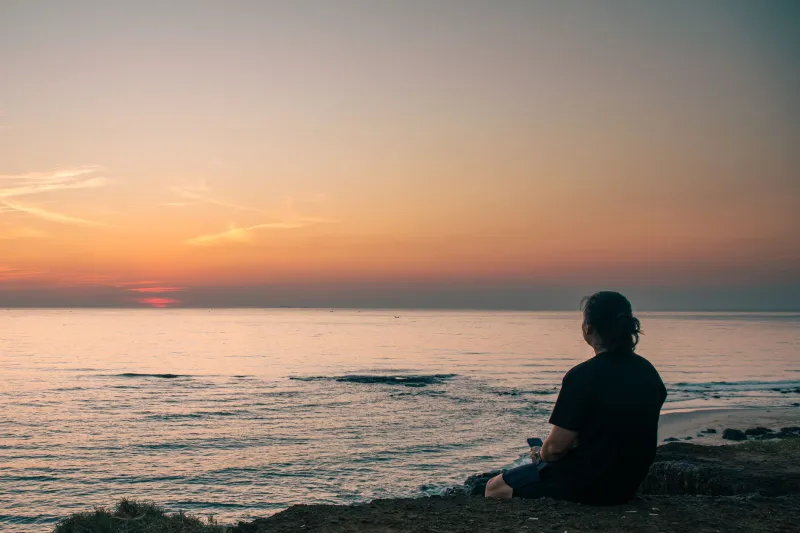
You've been back in the States for maybe three weeks. The jet lag is gone, the tan is fading, and you're sitting at your desk staring at a Zillow listing for a house you can't afford in a city you've stopped loving. And all you can think about is Yomitan — the way the ocean looked from the cape at dusk, the smell of salt and sugarcane, the inexplicable sense that life there had a different texture. Slower. Richer. More real.
So you start Googling. Visa options. Cost of living. Expat forums. And somewhere around midnight, you're halfway through filling out a worksheet titled "My Yomitan Relocation Plan."
Hold on. Just for a second.
The Euphoria Is Real — But So Is the Distortion
There's a reason travel writers have a phrase for it: vacation brain. It's that altered state where inconveniences dissolve, beauty amplifies, and your brain quietly edits out anything that doesn't fit the narrative it's building. You don't notice the August heat index. You don't register that the grocery run took forty-five minutes because your rental car GPS kept arguing with itself. You don't think about what it would feel like to do that commute in the rain, alone, on a Tuesday in February.
Yomitan is genuinely wonderful. That part isn't the lie. The village has a quality of life that's hard to quantify — a working pottery culture that's been alive for centuries, coastline that doesn't feel manufactured for tourists, a community pace that's hard to find anywhere in the continental US. None of that is exaggerated.
But a first visit, especially a short one, functions almost like a highlight reel. You're on vacation, which means your nervous system is already dialed down, your calendar is clear, and your only obligation is to enjoy yourself. Of course it feels perfect. You engineered it to.
What Long-Term Expats Actually Say
Talk to Americans who've been living in Yomitan for more than two years and a pattern emerges pretty quickly. Almost all of them describe their first visit in glowing terms. Most of them also describe a period — usually somewhere between months four and eight of actual residency — that they refer to with phrases like "reality check" or "the adjustment nobody warned me about."
One woman who relocated from Portland after a two-week visit put it plainly: "I moved for the version of Yomitan I experienced as a tourist. The real Yomitan is better in some ways and harder in others. But I wasn't prepared for the harder parts because I'd never seen them."
The harder parts look different for everyone. For some people it's the language barrier, which is manageable on vacation when you're charmed by miscommunications but genuinely exhausting when you're trying to sort out a health insurance issue or a utilities problem. For others it's the social architecture — Yomitan is a tight-knit village, and building real relationships there takes longer and requires more cultural fluency than a first visit suggests. And for a significant number of people, it's the simple, grinding reality of being far from family in a place where the support systems you took for granted back home just don't exist in the same form.
None of this means don't move. It means: know what you're actually deciding.
The Specific Traps First-Time Visitors Fall Into
The weather window trap. Most Americans visit Okinawa in spring or early summer, which means they experience Yomitan at its most photogenic. The typhoon season, the humidity peaks, the gray stretches of winter — those don't make it into the mental file. Before you commit to anything, at minimum read accounts from people who've been through a full calendar year.
The novelty filter. Everything unfamiliar feels interesting when you're a visitor. The local grocery store is an adventure. Navigating the bus system is a puzzle you're enjoying. Cooking with ingredients you can't read is charming. Residency eventually strips the novelty coating off all of it, and what's underneath needs to be something you can live with, not just something you found delightful for two weeks.
The comparison trap. First visits almost always happen when you're escaping something — burnout, a bad year, a relationship ending, a city that's stopped working for you. Yomitan gets evaluated against the worst version of your current life rather than a realistic baseline. That's not a fair comparison for either side.
The community illusion. Yomitan has a real expat community, and people are generally warm to visitors. But the friendliness you experience as a tourist — the easy conversations at a beach bar, the helpful stranger at the pottery market — is not the same as having a support network. Building that takes time and intentional effort, and it's worth asking yourself honestly whether you have the patience and social energy for that process.
A More Honest Framework for the Decision
None of this is meant to talk you out of anything. Plenty of Americans have made the move to Yomitan and would tell you it's the best decision they ever made. The goal here is just to make sure you're deciding based on something more durable than vacation euphoria.
A few questions worth sitting with seriously:
Can you visit during a less flattering time of year? A trip in late August or January gives you a very different read on the place. If you can arrange even a week during the off-season, do it.
Have you spent time in the expat forums beyond the highlight posts? The threads where people talk about what's genuinely hard — those are the ones worth reading carefully.
What's your realistic social plan for year one? Not the optimistic version, the realistic one. How will you meet people? What happens if it takes longer than expected?
What are you actually moving toward, versus away from? This one matters more than almost anything else. Moves motivated primarily by escape tend to hit a wall once the thing being escaped catches up — because it usually does, just with a different backdrop.
Yomitan Is Worth the Honest Look
The village doesn't need to be sold with rose-colored copy. It's genuinely a remarkable place to build a life — if it's the right fit for you, and if you go in with your eyes open. The people who thrive here long-term tend to share one trait: they did the work of understanding what they were actually choosing before they chose it.
Your first visit is a gift. Let it spark the interest. Just don't let it make the decision for you.