Paradise Has a Ping Problem: The Real Story of Remote Work in Yomitan
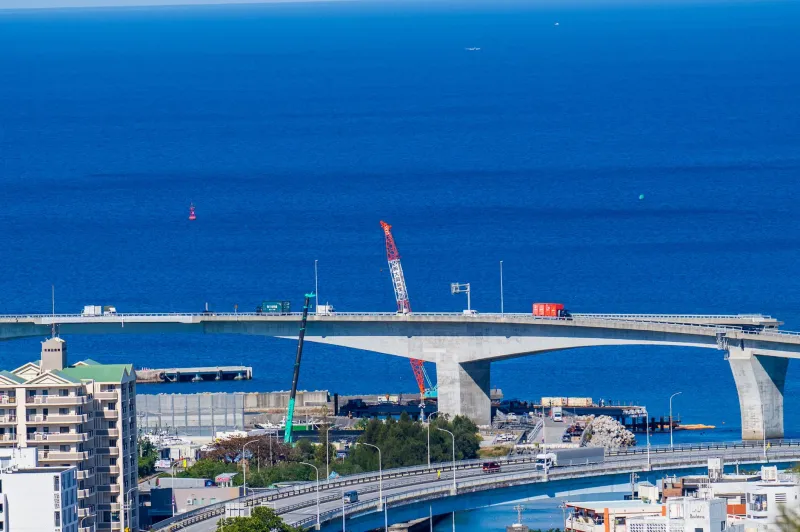
You've seen the photos. Laptop open on a tatami floor, golden light slanting through shoji screens, a cup of Okinawan tea steaming nearby. Remote work from Yomitan looks like a screensaver. And for the first two weeks, it genuinely kind of is.
Then your 9 AM standup becomes a 10 PM standup. Your Wi-Fi hiccups during a client demo. You realize the nearest reliable café with outlets closes at 6. And the serene, slow-paced village that drew you here starts to feel less like a backdrop and more like an obstacle.
This isn't a scare piece. Yomitan can absolutely work as a remote base—plenty of Americans are doing it right now with real success. But the gap between the fantasy and the functional reality is wide enough that it's worth walking through honestly before you book that one-way flight.
The Timezone Math Nobody Wants to Do
Okinawa runs on Japan Standard Time, which puts it 14 hours ahead of Eastern and 17 ahead of Pacific. That's not a minor inconvenience—it's a structural shift in your entire workday.
If your team is US-based, you're essentially living a nocturnal professional life. Morning standups happen at night. "Quick afternoon calls" land somewhere around midnight. Urgent Slack messages arrive while you're eating breakfast and expect responses that your colleagues consider same-day.
Some remote workers genuinely adapt to this. They work evenings Okinawa time, keep mornings free for beach runs and errands, and treat the schedule flip as a feature rather than a bug. Others find that working against their natural circadian rhythm for months at a stretch quietly erodes their focus, their mood, and eventually their productivity.
Before you relocate, have an honest conversation with yourself—and your employer—about flexibility. Async-first teams with no mandatory video calls are a fundamentally different situation than companies that expect you on Zoom at 2 AM three times a week.
Internet: Better Than You'd Expect, Until It Isn't
Yomitan isn't the digital wilderness. Fiber internet is available throughout much of the village, and when it works, it works well. Most long-term residents report reliable home connections once they're set up properly.
The problem is "once they're set up properly." Getting a Japanese internet contract as a foreigner involves paperwork, a guarantor in some cases, and wait times that can stretch two to four weeks. If you're coming in on a short-term stay, you'll likely be depending on pocket Wi-Fi devices or SIM card data plans—both of which are functional but have limits that become obvious fast during video-heavy workdays.
Cafés with reliable, work-friendly Wi-Fi are rarer here than in, say, Tokyo or Naha. Yomitan is a village, not a coworking hub. You'll find spots, but you'll need to scout them. The local library occasionally offers a quiet workspace option worth investigating. A few accommodations catering to longer-stay guests have started promoting work-friendly setups—it's worth asking directly before booking.
The Novelty Cliff
Here's something almost nobody talks about: the psychological arc of remote work in a place this beautiful follows a pretty predictable pattern.
Weeks one and two feel electric. You're working from Japan. Everything is new. Your productivity spikes because novelty is stimulating. You're sending postcards, exploring pottery villages, eating at every new spot on the main road.
By week six, you're sitting at the same table, on the same calls, dealing with the same spreadsheets—except now you're also dealing with the same limited social circle, the same language barrier at the grocery store, and the same creeping awareness that "exotic location" doesn't actually change the nature of your work.
This is the nomad trap specific to places like Yomitan: it's too beautiful and too interesting to leave quickly, but it's also too quiet and too insular to sustain the stimulation that made it feel special. You're not in a city where new experiences are around every corner. You're in a village. A genuinely lovely one, but a village.
The people who thrive here long-term aren't the ones who came chasing the aesthetic. They're the ones who came because they actually wanted slower, quieter, and more rooted—and who built a life that fits that reality.
Building Your Remote Work Infrastructure
If you're committed to making Yomitan your base, the practical work of building a functional remote setup is absolutely doable. Here's what actually helps:
Get your internet sorted before anything else. Research providers before you arrive, and if possible, arrange through your landlord or a relocation service. Having home fiber from day one changes everything.
Find your third place. Your apartment can't be your only workspace. Scout a café, a library corner, or even a specific outdoor spot that becomes your mental "work zone." The physical separation matters more than you'd think.
Connect with the expat and military community. Kadena Air Base is nearby, and there's a broader American community in the area than the village's quiet streets suggest. Facebook groups, expat meetups, and informal networks are real here. Other remote workers exist—finding them just takes a little more effort than in a major city.
Protect your mornings. If you're working US hours in the evenings, your Okinawan mornings are yours. Don't let them get swallowed by pre-work anxiety. Use them deliberately—beach walks, language study, pottery classes, whatever grounds you in actually being here rather than just working here from a different location.
Build in movement. Yomitan's greatest asset for remote workers isn't the scenery—it's the space to decompress physically. The coastline, the quiet roads, the ocean are right there. Remote work burnout hits differently when you have a seawall to walk off the stress.
When Yomitan Isn't the Right Fit
This deserves saying plainly: Yomitan is not the right remote work base for everyone, and recognizing that isn't failure.
If you need a dense coworking scene, regular professional networking events, and a city's worth of stimulation to stay motivated, Naha is 30 minutes away and offers more of that infrastructure. If your role requires frequent in-person travel across Asia, Okinawa's airport connections are functional but limited compared to Tokyo or Osaka.
Yomitan works best as a base for people who are genuinely drawn to village life—not just tolerating it as a trade-off for cheap rent and ocean proximity. The people who stay and thrive here tend to describe the quiet as something they actively sought, not something they're enduring.
If you find yourself six weeks in and counting the days until your next trip to the mainland for stimulation, that's useful information. It doesn't mean Yomitan failed you. It means you learned something real about what you actually need from a place.
For those who do find their rhythm here, though? The combination of affordability, natural beauty, cultural depth, and genuine community is genuinely hard to replicate. The trap isn't Yomitan itself—it's arriving without a clear-eyed sense of what it actually is.