No Expat Bubble Here: How Yomitan Village Actually Makes You Go Native
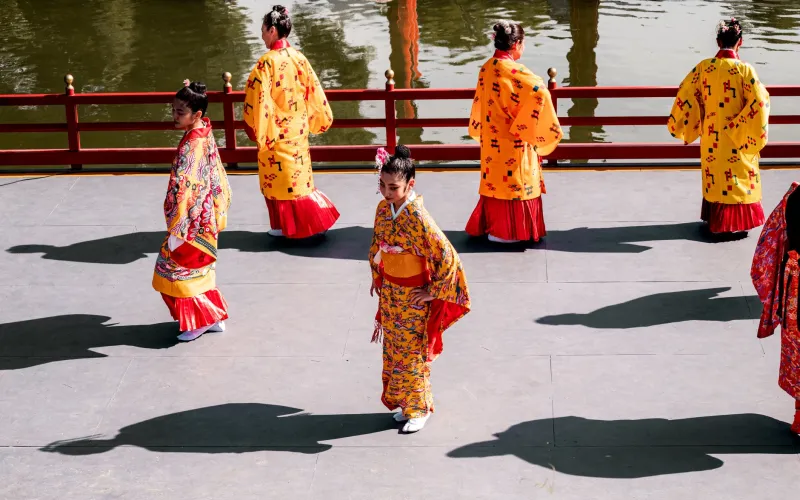
There's a certain kind of American expat life that exists in Japan's big cities. You know the type — the one where you spend three years in Tokyo, make a handful of foreign friends, order from English-friendly apps, and come home with a passport stamp but not much else. You were in Japan without ever really being of it. Yomitan doesn't work that way. And that distinction turns out to matter more than most people expect.
The City Safety Net Doesn't Exist Here
When Americans move to Tokyo, Osaka, or even Naha, there's a support structure that makes it entirely possible to coast. English menus. International grocery stores. Expat Facebook groups with thousands of members. Neighborhoods where half the residents are foreigners and the izakaya staff already knows how to take your order in English. The infrastructure for not integrating is robust, and a lot of people use it.
Yomitan strips that away — not cruelly, but completely.
Your local grocery store? The staff speaks Japanese. The community center where you signed up for the ceramics workshop? Japanese. The neighbor who knocked on your door with a plate of goya champuru to welcome you? She spoke about four words of English, and they were the four words that made you realize you needed to get serious about your language study, fast.
This isn't a complaint. It's the point. The absence of a safety net is exactly what forces the kind of engagement that most expats in big cities spend years trying to manufacture artificially.
Small Circles, Deeper Connections
In a major city, the expat community is big enough that you can spend your entire social life inside it. Yomitan's foreign population is small enough that this option doesn't really exist — or if it does, it gets boring fast. There are only so many times you can grab coffee with the same three Americans before you start craving something more.
That social pressure — gentle but real — pushes people outward. Into neighborhood associations called jichikai. Into the annual village festivals where you're not a spectator but an actual participant, handed a happi coat and pointed toward the taiko drums. Into friendships with the older woman at the farmers' market who grows bitter melon and has decided, inexplicably but wonderfully, to adopt you.
American expats who've lived in both Naha and Yomitan will tell you the difference is hard to quantify but impossible to miss. In Naha, you meet locals. In Yomitan, you know them. There's a texture to the relationships here that takes longer to build but runs deeper once it does.
Language as Survival, Not Study
Here's something that doesn't get said enough: the best way to learn a language is desperation. Not Duolingo. Desperation.
In Yomitan, you reach a point — usually within the first few months — where your inability to communicate stops being an inconvenience and starts being a genuine problem. You need to tell your landlord something is broken. You want to understand why the neighborhood is gathering at 7am on a Saturday. You're at a community dinner and someone is telling a story that everyone else finds hilarious and you want, badly, to be in on the joke.
So you learn. Not because you signed up for a class (though you might do that too), but because the daily friction of village life demands it. Vocabulary sticks differently when it's attached to a real moment — to the specific embarrassment of mispronouncing something at the fish counter, or the specific triumph of successfully navigating a conversation with your neighbor's grandmother.
Expats in Yomitan consistently report faster, more durable language acquisition than friends who moved to larger cities at the same time. The reason isn't mysterious. Immersion by necessity beats immersion by choice every time.
Rituals You Can't Opt Out Of
One of the quieter ways that Yomitan integrates you is through ritual. Okinawan village life runs on a calendar of community observances — seasonal festivals, ancestral ceremonies, neighborhood cleanups, agricultural traditions that have been maintained for generations. In a big city, these things happen but they're easy to miss or ignore. In Yomitan, they're hard to avoid, and once you've participated in one, you're expected at the next.
That expectation sounds like pressure, but it doesn't feel like it. It feels like being included. There's a meaningful difference between watching the Eisa drum dance as a tourist and being the American who shows up every year and actually tries to learn the steps. The village notices. The village remembers.
This is the paradox the headline is gesturing at: you can spend a decade in Tokyo and leave feeling like a permanent outsider. You can spend two years in Yomitan and leave feeling, genuinely, like you were part of something. The village's smallness — the very thing that might make it seem like a less exciting choice — is what makes the integration real.
The Discomfort Is the Gift
None of this is frictionless. There are weeks in Yomitan where you miss the anonymity of a big city. Where you wish you could just grab a burger and sit with other Americans and not have to think so hard about every interaction. Where the cultural gap feels wide and the language feels impossible and you wonder if you made the right call.
Those weeks are real. But expats who've pushed through them tend to look back on the discomfort as the actual gift — the thing that made them grow in ways that comfortable expat life in a big city never would have required.
Yomitan doesn't let you stay on the surface. That's frustrating at first. Eventually, it's the whole reason you came.
If you're considering a move to Okinawa and you're trying to decide between the convenience of a city and the depth of village life, know this: Yomitan will make you work harder and feel more. For a lot of Americans, that turns out to be exactly the trade they were looking for — even if they didn't know it when they booked the flight.