The Hilltop Where American History Sits Quietly: Rethinking Zakimi Castle
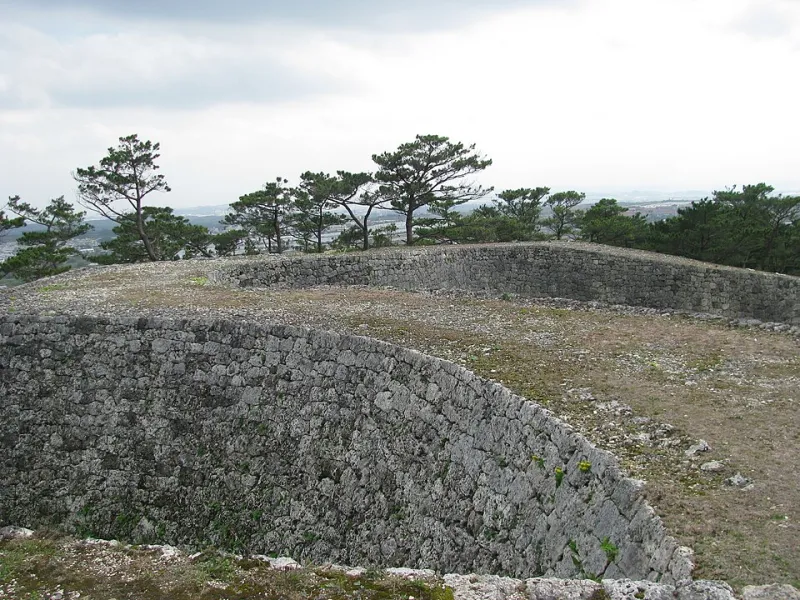
Photo: Vitalie Ciubotaru, CC BY-SA 3.0, via Wikimedia Commons
Most visitors climb Zakimi Castle for the view. The gusuku — Okinawa's own castle tradition, built from stacked coral limestone rather than Japanese timber and stone — dates to the early 1400s, and from the top you can see the whole western coast of the village spread out below. It's a stunning fifteen minutes. Then people take their photos and leave, and in doing so they walk right past the more complicated story this hilltop holds.
A Castle Older Than the Nation You're From
Zakimi was built by Gosamaru, a Ryukyuan lord whose engineering chops are still visible in the archways — some of the oldest stone arches in Okinawa sit right here. The castle predates the printing press in the Americas, the entire existence of the United States, and every single thing an American visitor considers "history."
Then the twentieth century happened, twice. The castle was dynamited by the Japanese military during World War II to build gun positions, damaged further in the Battle of Okinawa, and reconstructed in the 1980s and 90s. What you see today is partly original, partly careful restoration — a fact the site doesn't hide, and one worth knowing as you run your hand along the walls.
The Part Most Americans Don't Know They're Looking At
Here's what the guidebooks mostly skip: a large share of Yomitan's land, including the area around this hill, was taken for US military use after the war. The Kadena Ammunition Storage area — thousands of acres of Yomitan — sat behind American fences for decades. Village families who had farmed that ground for generations couldn't reach it.
That era is ending in real time. Sections of the storage area have been handed back, and the village has been turning returned land into parks, community facilities, and open space. When you see locals using land that was off-limits within living memory, you're watching a community literally take itself back, piece by piece, negotiation by negotiation.
Why This Matters for How You Show Up
I'm not suggesting anyone should feel guilty on vacation. But there's a difference between traveling through a place and traveling through it thoughtfully, and Zakimi is a spot where the second option is easy.
A few things worth holding in mind:
- Okinawa paid an outsized price in the Pacific war — the Battle of Okinawa killed a huge fraction of the island's civilian population. The war memorial sites down south cover this in depth; Zakimi gives you the quieter, more local lens.
- The warmth Yomitan locals show American visitors isn't amnesia. It's often a deliberate choice, made by people who lived through the occupation or grew up in its shadow. That deserves to be received as the gift it is, not assumed as a default.
- The US–Japan base relationship remains an active, debated political issue here. It's not your debate to referee, but knowing it exists is basic courtesy.
A Better Way to Spend the Hour
Go early, when the light hits the coral walls and the tour groups haven't arrived. Walk the full perimeter of the grounds, not just the photo spot. Read the signage — it's bilingual and honest. Then look west toward the coast and remind yourself that the quiet fields and parks down there were, within many residents' lifetimes, someone else's ammunition depot.
Zakimi Castle is beautiful. The land around it is a history lesson most Americans never got in school. You're standing on both at once, and that's exactly why the climb is worth more than the view.