Why a Village of 40,000 Is Quietly Becoming Okinawa's Hottest Startup Address
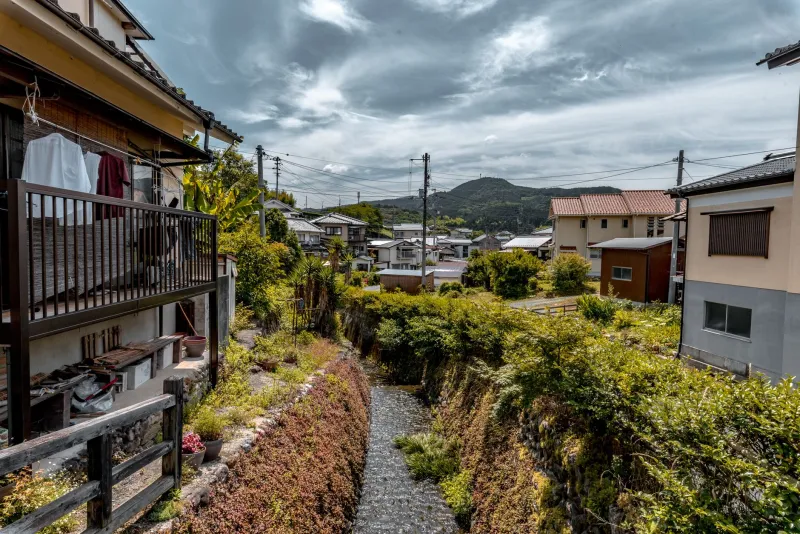
When most Americans picture launching a business in Japan, they imagine Tokyo — the bullet trains, the coworking lofts in Shibuya, the electric pace that supposedly breeds ambition. What they don't picture is a ceramic-tiled village on Okinawa's western coast, where the loudest thing on a Tuesday afternoon is the wind coming off the East China Sea.
And yet, quietly, that's exactly where a growing number of American entrepreneurs are choosing to set up shop.
Yomitan Village — population somewhere around 40,000, depending on who's counting — has developed a reputation among a certain kind of founder. Not the VC-chasing, pitch-deck-polishing type. The kind who wants to actually build something, with low overhead, real community, and enough mental space to think clearly. The kind who's done the math and realized that a village in Okinawa might just be smarter than a desk in a San Francisco WeWork.
The Numbers That Change the Conversation
Let's start where most business decisions start: cost.
Renting a workspace — or even a modest live-work setup — in Yomitan runs a fraction of what you'd pay in Tokyo, and a fraction of a fraction compared to most American cities. Monthly rent for a small house with enough room for a home office can land under $800 USD. Groceries, utilities, and the general cost of daily life follow the same downward trajectory.
For a bootstrapped founder, that math is transformative. Runway that might last six months in Austin or Portland stretches to eighteen months or more in Yomitan. That's not a small edge — that's the difference between a business that survives its early phase and one that doesn't.
Digital entrepreneurs especially feel this advantage. If your business runs on a laptop and a reliable internet connection, your physical address becomes a strategic lever rather than a fixed cost. And Yomitan, despite its village character, has solid fiber internet infrastructure — a legacy, in part, of its long relationship with nearby military installations and the infrastructure that comes with them.
Slower Pace, Sharper Focus
Talk to American founders who've spent time in both Tokyo and Yomitan, and a theme emerges pretty quickly: the city is stimulating, but it's also consuming.
Tokyo demands attention. Its density, its social rhythms, its sheer volume of things happening — it's exhilarating, but it's also a constant draw on your focus. Yomitan doesn't compete for your attention the same way. The village moves at a pace that, for the right kind of person, feels less like isolation and more like permission to work.
One American running a remote UX consulting practice described it this way: she'd tried building her client base while living in Naha, Okinawa's capital city, and found herself perpetually distracted — not unhappily, but distracted. After relocating to Yomitan, she hit her first six-figure revenue year within twelve months. She credits the quiet, the routine, and the fact that her social life became genuinely local rather than expat-bar adjacent.
Community as a Business Asset
Here's something that doesn't show up in most startup playbooks: in a small, tight-knit village, your reputation travels fast. And in Yomitan, that's actually a feature.
American entrepreneurs who've put in the effort to integrate — learning even basic Japanese, showing up to community events, building relationships with local business owners — report that the village becomes a genuine professional network. Local artisans, tourism operators, and small business owners are often looking for collaborators with skills they don't have: digital marketing, English-language content, e-commerce setup, design. Americans with those skills and a willingness to work locally have found themselves with unexpected partnership opportunities.
Yomitan's pottery tradition alone — centered around the famous Yachimun no Sato craft village — has generated real business for Americans who've helped local ceramic artists build international online sales channels. What started as neighborly assistance turned, in more than a few cases, into actual revenue-generating work.
The Paperwork Reality
None of this means launching a business in Japan is frictionless. It isn't.
Foreigners operating businesses in Japan navigate a real bureaucratic landscape. If you're working remotely for American clients and getting paid in dollars, the structure of your operation matters — and getting it wrong has tax and visa consequences. Most Americans operating here fall into one of two categories: those working as sole proprietors under specific visa arrangements, and those who've formally registered a Japanese business entity (typically a godo kaisha, a limited liability structure that's more accessible for solo founders than the larger kabushiki kaisha corporate form).
The general consensus among expat founders in Yomitan is this: get an accountant who speaks English and understands international tax obligations before you start, not after. The cost of that professional relationship is small relative to the headaches it prevents.
Local government offices in Yomitan are, by most accounts, approachable and willing to work through language barriers with patience. The village's administration has dealt with foreign residents for decades and has more experience with the process than you might expect from a small municipality.
What Kind of Business Actually Works Here
Not every business model is equally suited to Yomitan. Let's be honest about that.
Businesses that thrive here tend to share a few characteristics: they're primarily digital, they serve clients or customers outside Japan, and they don't require physical scaling. Consulting, content creation, software development, online education, e-commerce brands, remote creative services — these are the categories where Yomitan founders are finding traction.
Bricks-and-mortar ventures face steeper challenges. The village isn't a tourist magnet on the scale of Naha or the resort towns further north, and the local market is small. Americans who've tried to open hospitality or retail businesses aimed at a local customer base have generally found the path harder and slower.
That said, hybrid models — a digital-first business with a local physical presence, like a creative studio that runs online workshops but also does in-person retreats — have shown real promise. Yomitan's natural beauty and cultural richness make it a legitimately compelling destination for small-group experiences, and a few Americans have quietly built profitable retreat and workshop businesses on exactly that premise.
The Bigger Picture
Yomitan isn't trying to be a startup hub. There are no accelerator programs, no pitch nights, no branded coworking spaces with cold brew on tap. That's kind of the point.
What it offers instead is something harder to manufacture: a genuinely livable place with low friction, real community, and enough infrastructure to run a modern business. For a certain kind of American founder — one who's done the hustle-culture thing and found it mostly exhausting — that's not a consolation prize. It's the actual goal.
The village will keep doing what it's always done: pottery, fishing, festivals, sunsets over the water. But increasingly, tucked into the houses and small offices scattered across those coral-rock roads, Americans are quietly building things that work.