No Gym Membership Required: How Yomitan Quietly Turns Americans Into Their Healthiest Selves
Back in the States, the fitness industrial complex is hard to escape. Gym memberships you forget to cancel, apps that guilt you with streak notifications, pre-workout powders that taste like synthetic watermelon — we've built an entire economy around the idea that getting healthy requires infrastructure. So when Americans land in Yomitan and realize there's no 24-Hour Fitness, no SoulCycle, no smoothie bar with a $14 açaí bowl, the instinct is mild panic.
And then, somewhere around month three, they notice their jeans fit differently.
This is the Yomitan fitness paradox in a nutshell: a village with almost none of the things Americans associate with getting in shape somehow produces some of the most consistent, sustainable health transformations that expats report experiencing anywhere in the world. It's not magic. It's just a completely different relationship with movement — one baked into the geography, the culture, and the daily rhythm of life here.
Walking Is Just What You Do
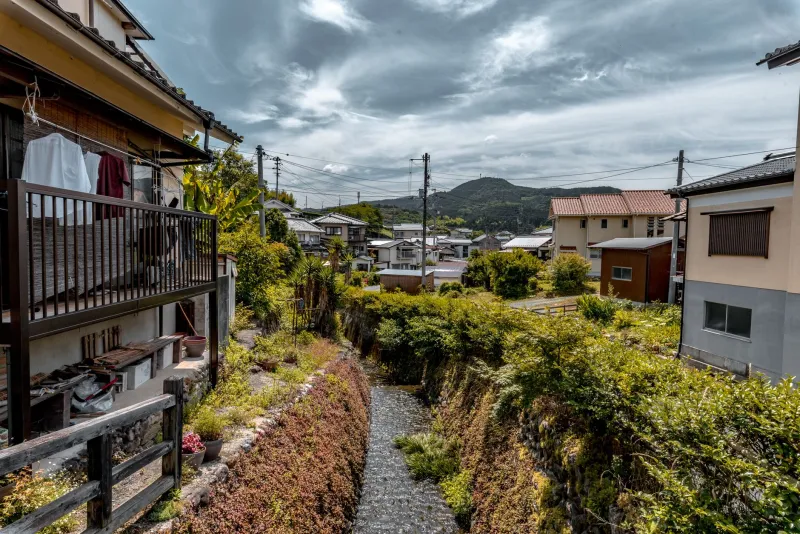
Yomitan's layout doesn't punish pedestrians the way American suburbs do. You're not staring down a six-lane road to get from your apartment to a convenience store. The village moves at human scale. Errands happen on foot. The beach happens on foot. The pottery district, the local markets, the neighborhood shrines — all of it is accessible without a car if you're positioned reasonably well.
Matt, a software developer from Portland who's been in Yomitan for two years, puts it plainly: "I never 'went for a walk' back home. It wasn't something I did. Here, I walk constantly and it doesn't even register as exercise. I just... live, and walking is part of that."
Research consistently shows that incidental physical activity — movement that happens as a byproduct of daily life rather than as a scheduled workout — has profound long-term health benefits. Yomitan delivers that almost automatically.
The Ocean Is Basically a Free Gym
Here's what the coastline offers that no gym membership can replicate: it's always open, it's free, and it's genuinely beautiful, which means people actually show up.
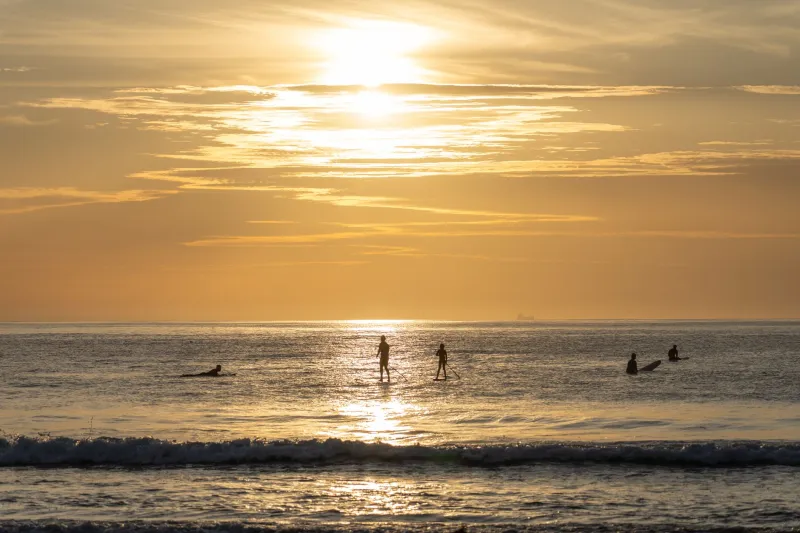
Stand-up paddleboarding has become a staple for expat residents, and it's a full-body workout disguised as something that looks effortlessly chill from the shore. Kayaking the coves around Yomitan's western coast hits your core and upper body in ways that no cable machine quite replicates. Snorkeling alone — just swimming out to the reef and back — adds up fast.
But it's not just the obvious water sports. Local fishing culture pulls people into long mornings of wading, casting, and walking shoreline. Yomitan's beaches aren't packed resort strips; they're working coastline with texture and life, and that draws people to spend real time in and around the water rather than just photographing it.
Keiko, a Yomitan local who teaches informal paddleboard sessions to newcomers, says she's noticed a pattern with American residents. "They come thinking they need a routine. Then the ocean just becomes part of their morning. After a few months they're stronger than they've ever been and they don't think of it as fitness at all."
Farming Isn't Just for Farmers
Yomitan has deep agricultural roots — it's one of Okinawa's significant farming areas, known for sugarcane and a variety of produce. And while most expats aren't running full-scale operations, many find themselves drawn into the farming ecosystem in ways that are genuinely physical.
Community garden plots are accessible to residents. Some expats connect with local farmers through community relationships and end up helping during harvest seasons — partly out of genuine interest, partly because Yomitan's social culture makes those connections feel natural rather than transactional. Digging, hauling, planting, and tending are old-school physical labor that works muscle groups modern gym equipment was specifically designed to simulate.
Jennifer, who relocated from Nashville three years ago, started helping a neighbor tend a small vegetable plot on weekends. "I wasn't thinking about fitness at all. I just liked being outside and learning something new. But I've built more functional strength doing that than I ever did on a weight machine."
Ancient Trails and Limestone Hills
Yomitan sits on terrain that rewards the curious. The village's inland areas include limestone formations, old military-era paths, and trails connecting historical sites — including ruins and sacred groves that don't show up on mainstream tourist maps. Hiking these isn't extreme by any measure, but it's consistent elevation change, uneven ground, and the kind of varied terrain that builds real-world fitness rather than treadmill fitness.
The historical layer makes it more compelling than a standard nature walk. You're navigating toward something — a crumbling castle foundation, a cave with wartime history, a hilltop with a view that makes you forget what you were even stressed about.
Slower Eating Is Part of It Too
Fitness isn't purely about movement, and Yomitan's food culture quietly supports the other side of the equation. The local diet skews heavily toward vegetables, tofu, fish, and fermented foods. Meals are typically smaller and eaten more slowly. The convenience food options that make American eating habits so easy to derail — drive-throughs, late-night fast food, giant portion defaults — are just not part of the landscape here.
This isn't about deprivation. It's about defaults. When your environment's food defaults are already pretty good, maintaining a reasonable diet stops feeling like a constant act of discipline.
What's Actually Happening Here
The deeper thing Yomitan does is remove the psychological friction that makes fitness so exhausting in America. Back home, working out is a separate activity that competes with your actual life for time and motivation. Here, movement is woven into the texture of existence. The beach is where you go on a Tuesday afternoon. The walk to the market is how you get groceries. The paddleboard is how you start your weekend.
When fitness stops being a chore you schedule and starts being what living here looks like, the results tend to follow — and more importantly, they tend to stick.
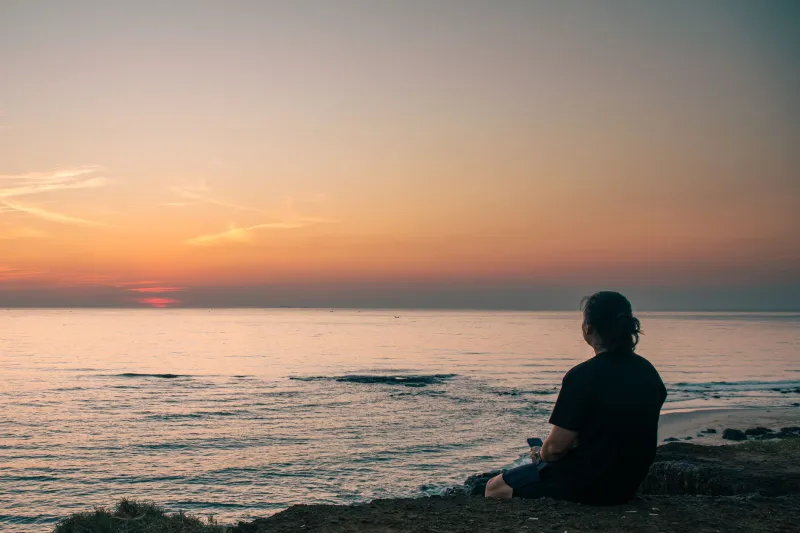
Americans who've spent time in Yomitan don't usually talk about "getting fit" while they were there. They talk about feeling good. They talk about sleeping better, having more energy, not thinking about their bodies with the same anxious hyperawareness that American wellness culture tends to produce.
That might be the real fitness paradox: the village that doesn't try to make you healthy is often the one that actually pulls it off.